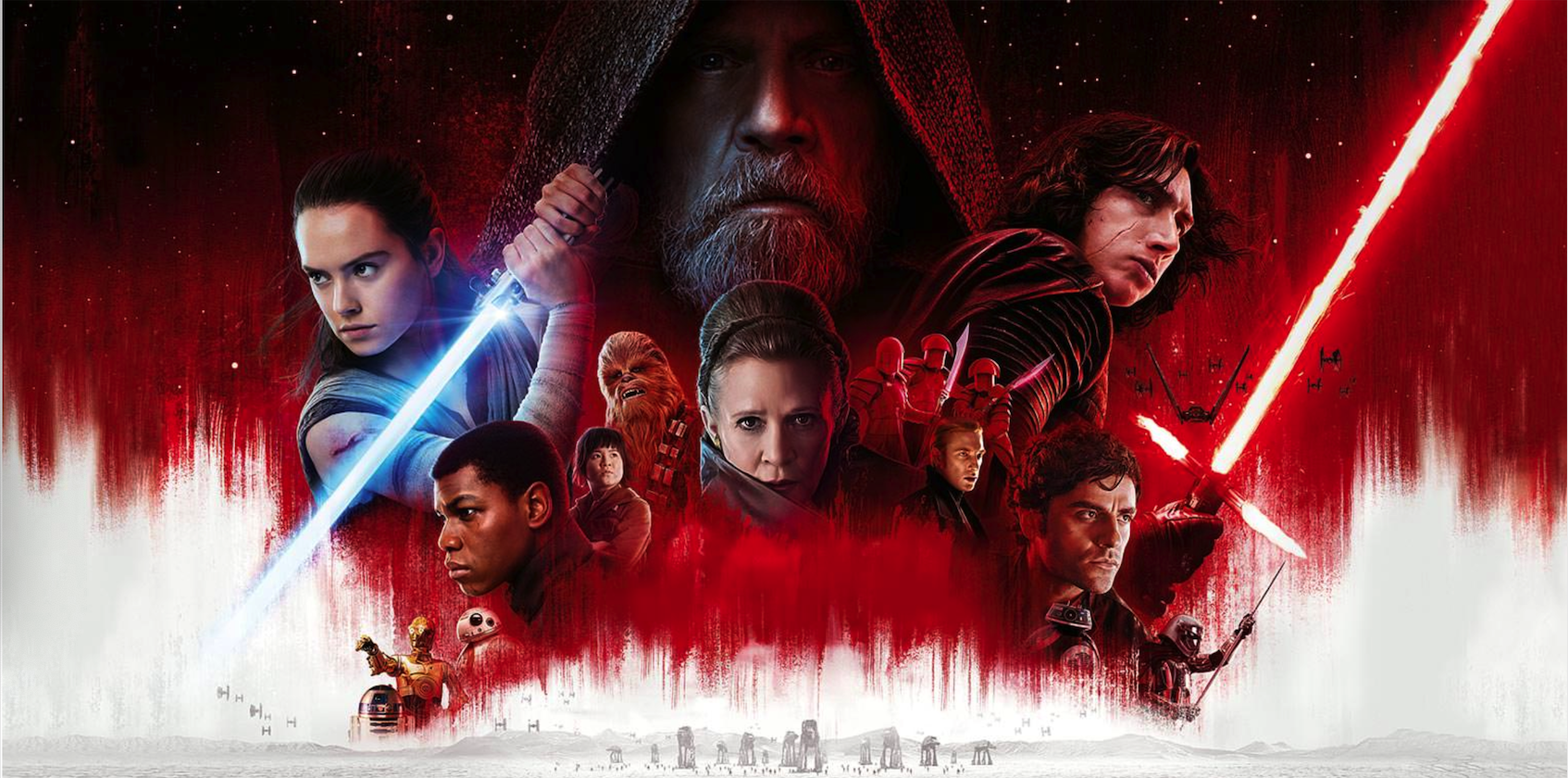
The Rise of Skywalker opens this week, promising to conclude not just the sequel trilogy but the entire nine-film Skywalker saga. As a lifelong Star Wars fan, I should be more excited than I am. But The Last Jedi left me with concerns that I'm not confident Episode IX can resolve. This is my attempt to articulate those concerns before seeing how the saga ends.
Leia Using the Force in Space
Let's start with one of The Last Jedi's most discussed moments: Leia surviving in the vacuum of space and using the Force to pull herself back to safety.
The scene raises multiple problems. First, the established biology of Star Wars—while hardly realistic—has never suggested that Force users can survive unprotected in space. Human bodies in vacuum face rapid decompression, lack of oxygen, and extreme temperature. The Force enhances abilities; it doesn't grant invulnerability to physical laws.
Second, we've never seen Leia use the Force with this level of sophistication. She's Force-sensitive, yes—she senses Luke in Empire Strikes Back, she feels Han's death in Force Awakens. But telekinetically propelling herself through space requires training and practice we've never seen her undergo. It's the kind of ability that took Luke years to develop.
Third, the visual execution was—to put it charitably—divisive. The "Superman pose" as Leia floated through space prompted unintentional laughter in theaters. A pivotal emotional moment became memeable, which undermines the drama regardless of whether the underlying concept is defensible.
The scene feels like Rian Johnson wanted a striking visual without fully considering whether it fit the established rules of the universe. Star Wars has always required suspension of disbelief, but there's a difference between accepting the Force as magic and accepting that the Force makes vacuum exposure survivable.
Lightspeed as a Weapon: The Holdo Maneuver
Admiral Holdo's sacrifice—jumping to lightspeed through Snoke's flagship, destroying it—was visually stunning. The moment of silence as the ship bisected the Star Destroyer fleet is genuinely one of the most beautiful shots in Star Wars history.
But it creates an enormous plot hole that the franchise will struggle to explain away.
If ramming ships at lightspeed is this effective, why wasn't this tactic used against the Death Star? Either Death Star? Why isn't this the standard weapon of space warfare? A single unmanned ship at lightspeed apparently inflicts more damage than entire fleets engaging conventionally.
The Holdo Maneuver retroactively renders every previous Star Wars battle nonsensical. If this weapon exists, why did the Rebellion sacrifice pilots in trench runs when they could have autopiloted an X-Wing into the Death Star's reactor?
The only explanation is that this tactic either didn't exist before (impossible—hyperspace has always worked the same way) or was forbidden by some unstated convention (which Holdo violated without comment). Neither explanation appears in the film. We're left to assume the tactic works now because the plot required it, even though it should have always worked.
This is the kind of world-building error that damages the entire franchise retroactively. Every time I rewatch the original trilogy, I'll now wonder why they didn't just Holdo the Death Star.
Finn's Abandoned Arc
Finn's character arc in The Last Jedi builds toward a heroic sacrifice. He's a former Stormtrooper finding his purpose, committing to a cause greater than himself. The natural endpoint is martyrdom—giving his life to save the Resistance, completing his transformation from deserter to hero.
The film sets this up explicitly. Finn pilots a speeder toward the battering ram cannon, prepared to die destroying it. It's emotionally resonant, thematically appropriate, and would give his character a meaningful conclusion.
Then Rose crashes into him, preventing the sacrifice.
Her explanation—"That's how we're gonna win. Not by fighting what we hate, but saving what we love"—is intended to be profound but doesn't survive scrutiny. First, Finn was trying to save what he loved by destroying the cannon. Second, Rose's intervention actually doomed what she loved by allowing the First Order to breach the Resistance base. The line is thematically empty.
More fundamentally, Finn's arc is derailed at its climax. He began as a character seeking purpose and was about to find it through sacrifice. Instead, he ends the movie having accomplished nothing meaningful. His entire Casino Bight subplot proved pointless—the plan failed, nothing was achieved, and he neither grew nor changed as a result.
This is a structural failure. Finn deserved better than a B-plot that went nowhere and a denied climax that served no narrative purpose.
The Problem with Hermit Luke
Luke Skywalker in The Last Jedi is not the Luke Skywalker we knew. He's bitter, defeated, and has abandoned the galaxy to darkness. He refuses to train Rey, refuses to rejoin the fight, refuses to be the hero the story needs.
This is a defensible creative choice. Heroes can fall. Legends can become disillusioned. There's something interesting about exploring what would break Luke Skywalker.
But the specific reason for his fall doesn't hold up.
Luke sensed darkness in Ben Solo—his nephew, Han and Leia's son—and for one moment considered killing him in his sleep. This moment of weakness drove Ben to become Kylo Ren and Luke to exile himself in shame.
The problem: this contradicts everything we know about Luke's character.
In Return of the Jedi, Luke faced Darth Vader—a mass murderer responsible for countless deaths including Luke's mentor, his aunt and uncle, and Alderaan's billions. Vader had tortured Luke's friends, cut off his hand, and represented the Empire's ultimate evil. And Luke still believed in redemption. He threw away his lightsaber rather than kill his father. He saw good in the second-most evil person in the galaxy and was proven right.
Given that Luke saw good in Darth Vader—a monster who had committed genocide—the idea that he would consider murdering his sleeping nephew because of potential darkness strains credibility. This is not the same character.
The film tries to have it both ways. Luke is heroic enough that his fall is meaningful, but susceptible enough to darkness that he would contemplate killing a child. These characteristics don't coexist in the same person. The Luke who refused to kill Vader would never have ignited his lightsaber over Ben Solo.
The Snoke Mystery: Abandoned
The Force Awakens introduced Supreme Leader Snoke as a mysterious new villain. Where did he come from? How did he rise to power after the Empire fell? What's his connection to the dark side? The film clearly positioned these as questions to be answered.
The Last Jedi's answer: who cares? Snoke dies halfway through the film without any backstory revealed. His origins remain unknown. His powers remain unexplained. His relationship to Palpatine, the Sith, and galactic history remains unaddressed.
This is a deliberate subversion of expectations. Johnson chose to reject the "mysterious backstory" approach and instead treat Snoke as a plot device rather than a character. It's a defensible creative choice in isolation.
But it creates problems. The sequel trilogy needed a compelling villain. With Snoke dead and his mystery unsolved, the trilogy is left with Kylo Ren as its primary antagonist—and Kylo Ren has significant problems as a final villain.
Kylo Ren as Weak Antagonist
Kylo Ren is a fascinating character study: a privileged child who chose darkness despite having every advantage, whose rage compensates for his inadequacy, who wants to be Vader but isn't. He's emotionally complex and well-acted.
He's also repeatedly defeated by undertrained opponents.
In The Force Awakens, Rey beats him in their first lightsaber duel despite having no training. Yes, he was injured. But he's also supposed to be the trilogy's primary threat. A villain who loses to the hero in their first encounter struggles to project menace in subsequent films.
In The Last Jedi, he's manipulated by Snoke, tricked by Luke's projection, and ends the film throwing a tantrum on an empty base. He fails to catch the Resistance, fails to turn Rey, fails to achieve any of his goals. He's not intimidating—he's pathetic.
This works for his character arc. The whole point of Kylo Ren is that he's not Vader, that he's a pretender struggling to live up to a legacy he can never match. But it doesn't work for his role as the trilogy's final antagonist.
The teased return of Palpatine in Episode IX trailers feels like confirmation that the filmmakers recognized this problem. Kylo Ren cannot carry the finale alone. They need a bigger bad, so they're resurrecting the biggest bad.
Whether this saves the trilogy or further complicates it remains to be seen. Bringing back Palpatine raises its own questions—how did he survive the Death Star II explosion? What's his relationship to Snoke? Why didn't he reveal himself earlier? Rise of Skywalker has a lot of explaining to do.
Looking Ahead
Despite everything I've written, I want Rise of Skywalker to succeed. Star Wars shaped my childhood. The original trilogy sparked my imagination in ways that still resonate. Even the flawed prequels have moments of genuine wonder.
The sequel trilogy has struggled with coherent vision. The Force Awakens set up mysteries; The Last Jedi rejected them; Rise of Skywalker must now construct a satisfying conclusion from conflicting pieces. It's a difficult task that may not be achievable.
But Star Wars has surprised me before. Return of the Jedi resolved Empire's cliffhanger satisfyingly. Rogue One elevated familiar story beats through execution. The Mandalorian is currently demonstrating that the franchise still has life.
I'll be in the theater this week, hoping for the best. The Skywalker saga deserves a conclusion worthy of its legacy. Whether Rise of Skywalker delivers that conclusion or confirms the sequel trilogy's structural problems remains to be seen.
Here's hoping it sticks the landing.